

Rent or Buy? Compare More Than the Monthly Bill
Renting and buying exchange different kinds of cost and flexibility. Rent is visible each month, while ownership adds closing costs, taxes, repairs, possible price changes and opportunity cost. A break-even result depends heavily on your assumptions.
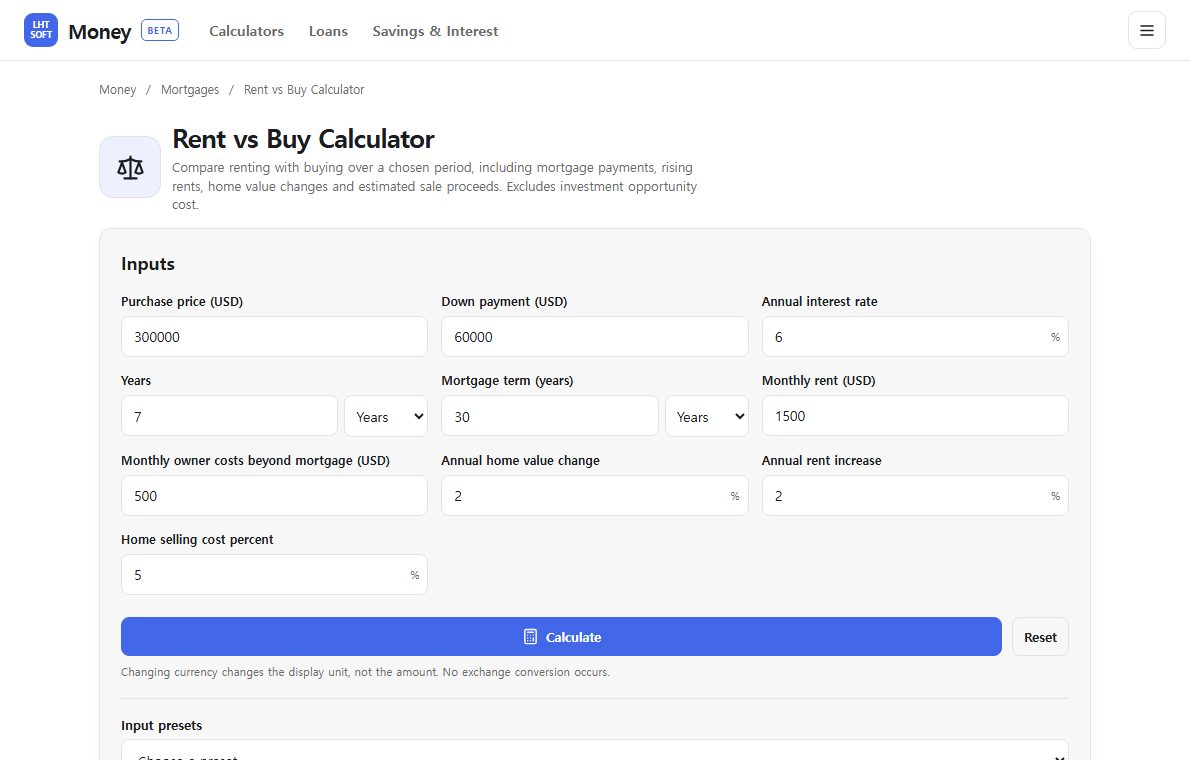
Set a realistic holding period
How many years are you likely to stay? Buying can make less sense if you expect to move soon and transaction costs are high. Compare at least a shorter and a longer holding period instead of assuming you will never move.
Include upfront and ongoing costs
A purchase may require down payment, taxes, fees and maintenance. Renting may require deposits, insurance and annual increases. Use local quotes where possible, and keep estimates clearly marked.
Model what happens to the cash difference
Cash used for a down payment cannot simultaneously be invested elsewhere. Decide how the comparison handles potential returns on that money and monthly savings. Avoid double counting principal repayment as an expense and equity gain.
Stress-test uncertainty
Change price growth, investment return, rent increases and mortgage rate. If a small input change flips the outcome, the decision is not robust. Consider nonfinancial needs such as moving flexibility, schools or maintenance responsibility.