

How to Compare Compound Interest Scenarios
A compound interest projection is not a promise about future investment performance. It helps you understand how starting balance, regular deposits, time and the assumed return interact. The most useful comparison changes one input at a time.
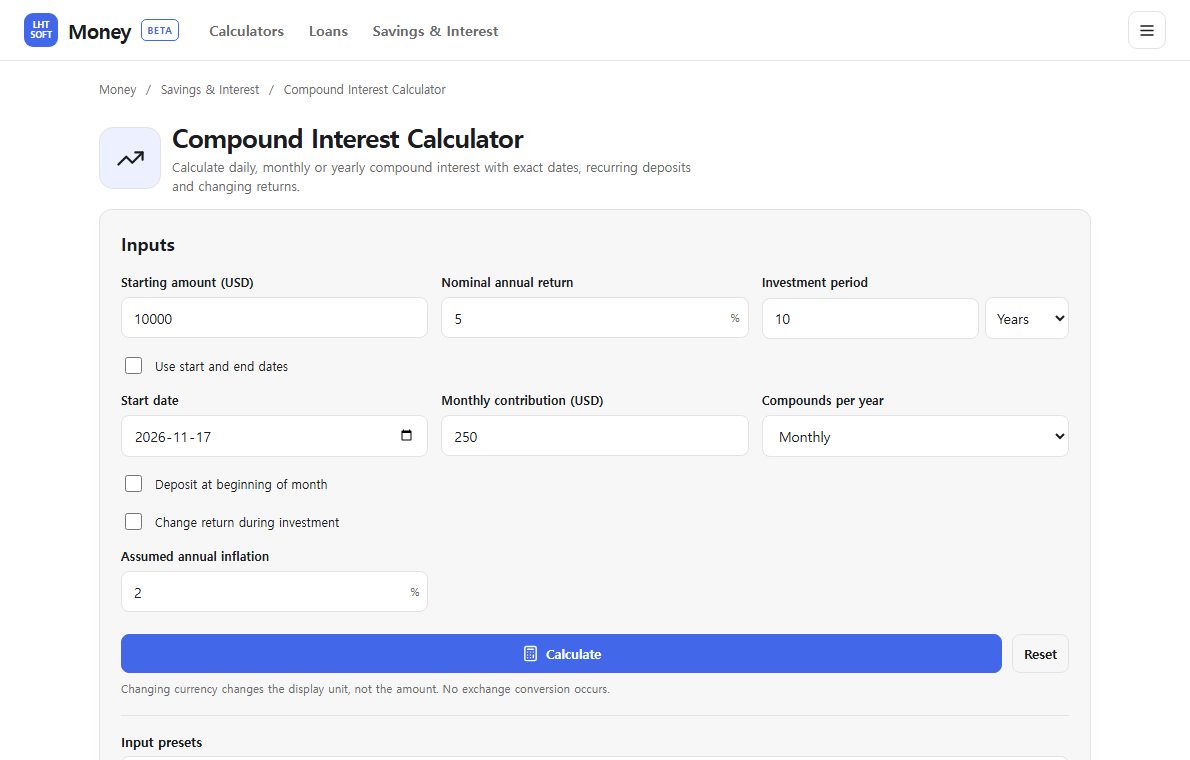
Record the starting assumptions
Set the initial amount, contribution size, contribution timing and number of years. Check whether the rate means an annual nominal rate or an effective rate and how often interest is compounded.
Compare deposits before rates
Run one scenario without additional contributions and another with the monthly amount you can actually save. This helps distinguish growth from your own cash deposits. Keep a copy of the total contribution figure for later review.
Use a range of return rates
Try conservative, middle and optimistic assumptions rather than treating a single rate as certain. If the tool supports inflation adjustments, check purchasing-power equivalents separately from nominal totals.
Check fees, taxes and liquidity
Fees and taxes can reduce the amount you keep; some savings products restrict withdrawal or have changing rates. A calculator may not represent all of these conditions. Use the output as a planning illustration and verify the account's actual terms.