

How to Solve a Nonogram Without Guessing
A nonogram is a picture puzzle built from row and column clues. Each number describes a consecutive group of filled cells, and separate groups need at least one empty cell between them. Most early progress comes from finding guaranteed cells.
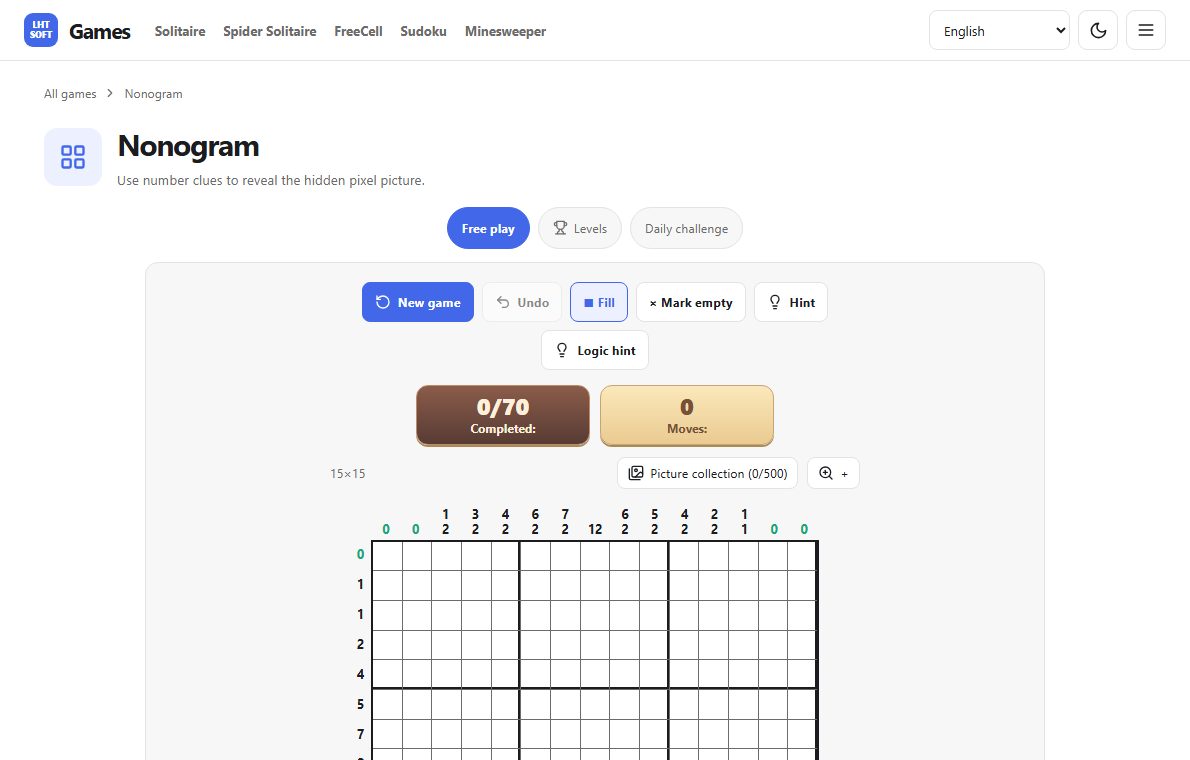
Read clue groups carefully
A clue such as 3, 1 means three consecutive filled cells, one or more empty cells, then one filled cell. It does not specify the exact position until other information is known.
Start with forced overlaps
On a short line, a long group may overlap in every possible placement. Mark only the cells common to all valid positions, rather than assuming the group starts at an edge.
Use completed lines to mark empties
When a group or whole line is confirmed, mark its boundaries and remaining empty cells. Those empty cells restrict perpendicular lines and often reveal the next guaranteed move.
Alternate row and column reasoning
After each certain mark, recheck crossing clues. If several placements remain possible, leave the cells undecided and move to another line. Guessing early can create a puzzle state that looks plausible but is inconsistent.