Beats, subdivisions and meter: how to practice with a metronome
Counting every note as a beat can make a passage feel twice as fast as intended. A metronome is a reference pulse, not necessarily a click for each note. Decide what the beat represents before changing its tempo.
Published: · Updated:
Separate the beat from the notes
At 60 BPM a beat lasts 1000 ms. If two equal notes fit inside one beat, each lasts 500 ms; four equal notes last 250 ms each. These durations describe even subdivisions, not the way every musical performance must sound.
Read the meter and beat unit
In simple meter a beat divides naturally into two. In compound meter it divides into three; for example, common 6/8 music often groups six eighth notes into two dotted-quarter beats. The metronome marking and musical context determine which note value gets the click.
Practice before increasing the speed
Set a comfortable pulse and tap it with your foot. Speak or clap subdivisions without adding extra time at the end of each group. If you lose the pulse, reduce the tempo and count aloud rather than accelerating to catch up.
Check timing rather than counting clicks
At 120 BPM a beat lasts 500 ms and its two equal divisions last 250 ms. Record a short passage and listen for consistent placement relative to the pulse. A recording can reveal rushing and uneven subdivisions, but speaker latency and recording alignment can affect measurements.
A two-tempo rhythm exercise
- Set a metronome to 60 BPM and tap one time per click.
- Clap two evenly spaced notes per beat; maintain the original foot taps.
- Set 120 BPM and clap once per click; compare with the preceding double subdivision.
- Return to 60 BPM and count three equal subdivisions per beat without changing the pulse.
The claps at 120 BPM match the two subdivisions at 60 BPM in spacing (500 ms), but the beat grouping differs. Four subdivisions at 60 BPM or two at 120 BPM last 250 ms each.
Production test results
Test date:
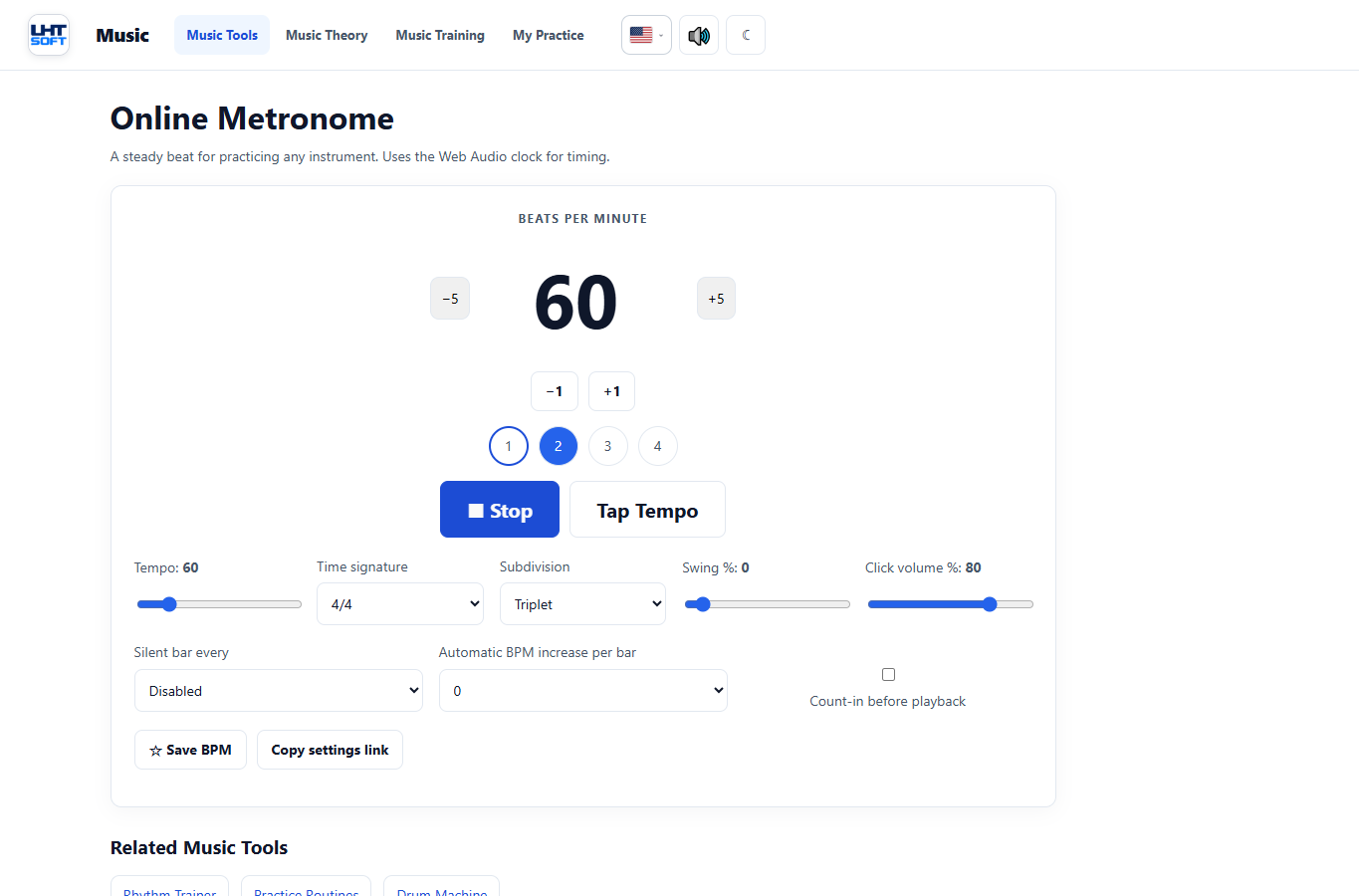
Live Music scheduling test: six combinations of tempo and subdivision matched the calculated intervals within the recorded tolerance. These are Web Audio scheduled timestamps, not acoustic output or physical device measurements.
60 BPM × 1: 1000 ms60 BPM × 2: 500 ms60 BPM × 3: 333.333 ms60 BPM × 4: 250 ms120 BPM × 1: 500 ms120 BPM × 2: 250 msWeb Audio scheduled intervals; not acoustic latency
Independent check: Chrome AudioScheduledSourceNode.start timestamps vs 60 / BPM / subdivisions
Real Chrome screenshot